Showing posts with label Western Australia. Show all posts

Sunday, May 23, 2021

What your boss really knows about your internet usage

West Live Podcast
I was interviewed by Ben O'Shea for PerthNow's The West Live Podcast, on "What your boss really knows about your internet usage and why incognito mode won’t protect you" (West Australian Newspapers, May 21, 2021 2:35PM):

"It turns out your boss can see much more than you think when it comes to your internet usage at work, no matter how incognito you get.

Australian National University honorary lecturer and technology consultant Tom Worthington knows a thing or two about what you can and can’t get away with at work when it comes using the web."

Tuesday, November 12, 2019

Digital Law on Rottnest Island

Selfie, at Rottnest Hotel
Perth in the distance, from
the front step of Rottnest Hotel
Greetings from Rottnest Island, just off the coast of Western Australia, near Perth, where I am with a couple of dozen lawyers, discussing how to digitize the law. I have been asked to talk for an hour on cyber security, which is not my specialty, and  I suspect I will not get past my third slide, without this room full of bright young things taking us off on an interesting tangent.

Some notes:

Smart contracts

Blockchain Challenges, ACS 2019
“A smart contract can be defined as an event-driven computer program that executes on an electronic distributed, decentralised, shared and replicated ledger used to automate transactions. Even where a smart contract is not technically a ‘contract at law’, it may give rise to obligations and remedies that sound like a contract in law.”
From: Blockchain Challenges for Australia: An ACS Technical Whitepaper, by Nick Addison, Samuel Brooks, Katrina Donaghy, Mark Ebeling, Scott Farrell, Vincent Gramoli, Adrian Lawrence, Marc Portlock, Mick Motion-Wise, Bridie Ohlsson, Beth Patterson, Philippa Ryan, Mark Staples, Ingo Weber, and Tom Worthington, 2019, Australian Computer Society, Page 37 (emphasis added). URL http://bit.ly/acsblock

Protecting Smart Contracts

ANU Cyber Reading Group
“Fuzzing is an approach to software testing where the system being tested is bombarded with test cases generated by another program. The system is then monitored for any flaws exposed by the processing of this input.”
From: Fuzzing: The State of the Art, by Richard McNally, Ken Yiu, Duncan Grove and Damien Gerhardy, Command, Control, Communications and Intelligence Division, Defence Science and Technology Organisation, DSTO–TN–1043. URL https://apps.dtic.mil/dtic/tr/fulltext/u2/a558209.pdf

The Human-Factor in Security


Fake Day Care Centre
Webpage, SMH, 2013
  • Social engineering can be used to fool staff to give access to a secure system.
  • The attacker collects information used for phishing attacks.

Fake childcare website from: Page, F., & Jean, P. (2013, April 16). Free childcare scam aimed at intelligence staff. Sydney Morning Herald. Retrieved from: http://www.smh.com.au/it-pro/security-it/free-childcare-scam-aimed-at-intelligence-staff-20130415-2hwhq.html

Asia Pacific Hypothetical

RAAF P-3 Orion Aircraft,
photo by 'Timothy'
CC BY 2.0, via Wikimedia Commons
"At 02:20 Zulu, 1 April 2017, one of our maritime surveillance aircraft was reported missing. The aircraft was conducting a freedom of navigation flyover on one of the reefs, subject to claim by several nations. The last recorded radio transcript … “Mayday, Mayday, Mayday, this is Surveillance One Zero Five Charlie Delta, one zero zero kilometers South East of ... " [Transmission ends]” ...
It is proposed to target the opposing force's electronic control systems. This is expected to disable electrical systems and cause some local electrical fires. Our intelligence assets in the area will arrange for video of the damage to be posted to social media, for maximum news value. We will be working with civilian government personnel with special expertise, to prepare a human factor attack on their Internet of Things (IoT)."

From Cyberwar: Hypothetical for Teaching ICT Ethics, by Tom Worthington for the course ANU Networked Information Systems, http://www.tomw.net.au/basic_ict_professional_ethics/#ch170077

Cyberweapons


Information Warfare Division (IWD),
Australian Department of Defence
"the purpose of a cyberweapon is to attack an information system in order to perpetrate harm".

From Henschke, A. (2014). A decision-making procedure for responding to cyber-attacks. In M. Keelty, A. Henschke, N. Evans, S. Ford; A Gastineau; L. West, Cybersecurity: mapping the ethical terrain. National Security College (ANU). URL http://nsc.anu.edu.au/documents/ocassional-paper-6-cyber-ethics.pdf


“Offensive Cyber Security operations introduces and exercises a complete range of reverse engineering techniques and attack patterns. Students will also learn and exercise analysis of systems based on minimal information.”

From ANU (2019). Cyber Offensive Operations Course (COMP8502), ANU Handbook. URL https://programsandcourses.anu.edu.au/2019/course/COMP8502

Reponse to Attack

“Credential theft. … four spearphishing emails, to ANU users ...
Compromised infrastructure. The actor built a shadow ecosystem of compromised ANU machines, tools and network connections to carry out their activities undetected. Some compromised machines provide a foothold into the network. Others, like the so-called attack stations, provided the actor with a base of operations to map the network, identify targets of interest, run tools and compromise other machines
Data theft. The actor used a variety of methods to extract stolen data or credentials from the ANU network. This was either via email or through other compromised Internet-facing machines. …”

From: From Incident Report on the Breech of the Australian National University's Administrative Systems, ANU, 2 October, 2019 URL https://imagedepot.anu.edu.au/scapa/Website/SCAPA190209_Public_report_web_2.pdf

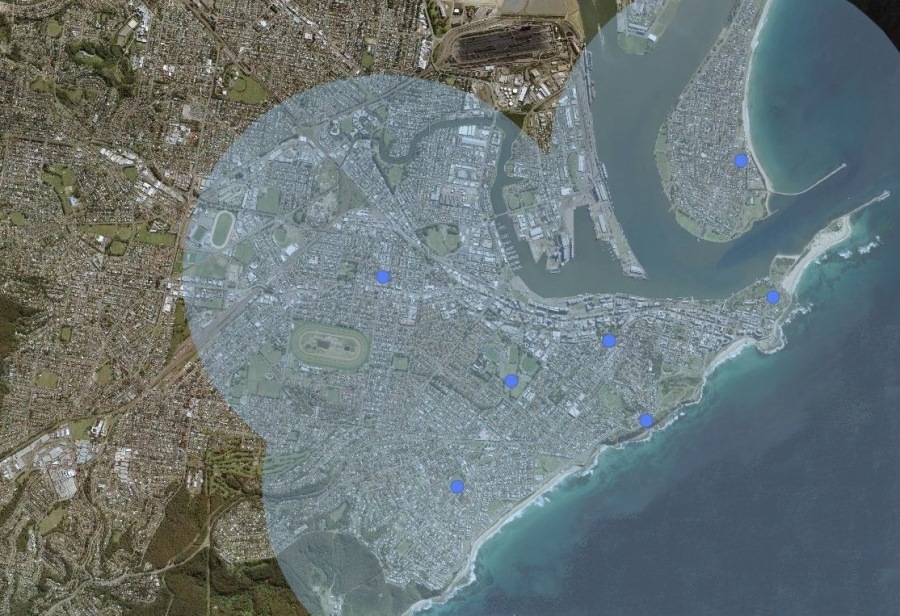
Internet of Things

Newcastle IoT Coverage,
City of Newcastle 2018
“The Internet of Things is the interconnection via the Internet of computing devices embedded in everyday objects, enabling them to send and receive data.”

From: From: Council begins roll out of smart city tech, City of Newcastle, 24 Apr 2018. URL https://www.newcastle.nsw.gov.au/Council/News/Latest-News/Council-begins-roll-out-of-smart-city-tech

ps: ANU to run 'cyber bootcamp' for ASEAN officials, By

Tuesday, September 24, 2013

Co-working in Perth

I booked a Tour of the Spacecubed Co-working space in Perth . But what I didn't realize is there are two Spacecubed offices in St George's Terrace, Perth. The older office is at 45 St George's Terrace, in an old bank building (they have a meeting room in the old vault).

The newer is at 131St George's Terrace, about two blocks further West, in another ornate building. Number 45 was buzzing with activity, with people coming for meetings and others hard at work at their workstations.

There is the usual co-working setup, with a lounge area, for informal socializing (and work), rows of desks for work and some meeting rooms. The ideal such setup has a reception desk near the front door, which also have sight of the entire facility, so one person can keep an eye on things, much like the librarian at the front desk of a library.

There can be transparent screens (Space cubed has some glass partitions and other made of perforated sheet), which provide some partial privacy. As well as small private meeting rooms, the common area can be used for large events, with some people still sitting at their desks working.

A couple of features at Space Cubed I have not seen at other such places in Australia (and Sri Lanka)  are a Yammer site for members to congregate on-line and Community Membership for those who don't need office space, but want to be part of the community.

Number 131 is smaller, newer and less busy (there is a meeting this-evening to co-design the space. While I was there an economist turned up looking for space. This surprised me as I thought it was only web entrepreneurs who inhabited these places. But apparently other professionals are looking for low cost flexible space with a pool of services to hand (including web designers).

 Perhaps these co-working spaces will evolve into something like the old lawyers chambers, where individual professionals form a cooperative for office space and then ancillary services group up around this.

Sunday, September 22, 2013

Spacecubed Co-working in Perth

Spacecubed in Perth, is a new Co-working, Collaboration and Innovation Space in the Perth CBD. Like Fishburners in Sydney and Entry 29 in Canberra, Spacecubed offers low cost shared office space to those starting up a new business venture, with the chance to meet like minded people.

One useful feature is reciprocal membership, with Spacecubed in Perh, teaming with Cityhive Geraldton and Sync Labs Leederville (also in Western Australia), as well as Fishburners Sydney, York Butter Factory Melbourne, River City Labs Brisbane, , Typewriter Factory, Hobart, and  Fill in the Blank Hong Kong.

One problem which Spacecubed has, along with other co-working spaces (in my view), is the silly name. It would be a lot easier to understand if it was called "Perth Co-working Centre", "Perth Startup Office" or the like.

Friday, September 06, 2013

What to do in In Perth 23 September to 18 October?

I will be in Perth, staying in Nedlands adjacent to UWA, 23 September to 18 October for family reasons. I will be continuing my consulting work and as an Adjunct Lecturer at ANU via the Internet, while away from Canberra. But was wondering if there was anything I could do to help the Perth IT and academic community while there.

Recent items which may be of interest:
  1. Cloud Computing Consultations with Australian Government
  2. MOOCs with Books: Technology Plus Traditional Teaching for an On-line Education Revolution
  3. What Social Media can do for Universities
  4. How, What and When of Improving Student Satisfaction 
  5. Re-skilling Public Servants as Private Sector Innovators and Educators
  6.  

Wednesday, April 20, 2011

Community Recovery from Disaster

Dr Rebecca Whittle from Lancaster University gave an entertaining and informative talk on "Flood Recovery in the UK" at University of Western Australia, yesterday. She described research into the June 2007 floods in Hull, England, where 8000 families were displaced. A longitudinal study using diaries and group discussion was carried out. As well as papers published (Whittle, Rebecca and Medd, William and Deeming, Hugh and Kashefi, E. and Mort, Maggie and Walker, Gordon and Watson, Nigel (2010) After the rain - learning the lessons from flood recovery in Hull. Final project report for 'Flood, Vulnerability and Urban Resilience: a real-time study of local recovery following the floods of June 2007 in Hull'. Project Report, Lancaster UK) and input to the UK Government Pitt Review into the flooding, a game to help policy and operations staff was created.

Also the event I picked up a copy of the National Climate Change Adaptation Research Facility newsletter. Also at the event was Frank Yardley, Manager Climate Change Adaptation, RMIT.

The key point Dr Whittle made was that while the first response for the Hull floods was good, the community felt abandoned after the emergency workers left. The following period, of having to deal with insurance companies and builders was as stressful as the flood emergency itself, and for this there was little coordinated support. It occourred to me that the web could be used to provide some such support. This could be via individuals smart phones and other portable devices and also via community centres, particularly the local library.

However, in accordance with good ICT practice, before building a an online system, it is best to simplify the manual process first. The problem here is that while emergency response is coordinated by government, recovery is largely left to individuals to sort out with private companies.

In a major disaster, this is inefficient and stressful for those involved. That situation could be improved with standard terms in insurance contracts and standard processes, both on paper and online. Dealing with builders could similarly be standardised. This may need legislation to allow provide companies to coordinate their activities without fear of prosecution for collusion. It may also require some level of financial reward or compulsion for parties to comply. As an example, small builders would be reluctant to coordinate their activities.

Insurance and building staff would need training in how to use online systems to coordinate their work in an emergency. But this could have benefits in making their work practices more efficient even when there is not an emergency. This would reduce the customer frustration when they do not know when the person is going to arrive or what stage their work is up to.

Sunday, April 17, 2011

Flood Recovery in the UK

Dr Rebecca Whittle from Lancaster University will speak on "Flood Recovery in the UK" at University of Western Australia, in Perth, 4pm 19 April 2011.Link
In June 2007, the English city of Hull was devastated by flooding which displaced over 8000 families from their homes. A real-time longitudinal study was undertaken to document the long term experiences of flood recovery. The study used an action research model to document and understand the everyday experiences of individuals following the floods. The project has fed into policy in a number of ways. It provided evidence to the Pitt Review of the nationwide 2007 flooding. Staff from the UK Cabinet Office Civil Contingencies’ Secretariat were very involved in the project steering group, which led to the development of good working relationships between the Secretariat, research team and a number of the participants. Several of the project’s participants have since set up as independent flood consultants.

Dr Rebecca Whittle is a senior research associate in the Lancaster Environment Centre at Lancaster University in the UK. She has spent the past four years studying natural disasters from a social science perspective. She is particularly interested in using ideas of resilience and vulnerability to explore adults’ and children’s experiences of longterm disaster recovery. Rebecca has also worked with CapHaz-Net, a European project on a range of natural disasters.

Dr Whittle’s presentation will be followed by comments on recovery in Australia and discussion.
Location: Robert Street Lecture Theatre
Contact: Bryan Boruff bboruff(a)cyllene.uwa.edu.au
Start: Tue, 19 Apr 2011 16:00
End: 18:00

Tuesday, February 23, 2010

Transportable Data Centre for Broadcaster and Bulldozer Company

Broadcaster Seven Network Limited has proposed merging with the WesTrac machinery company to form Seven Group Holdings Limited. A TV broadcaster might not seem to have much in common with a company which sells and repairs Caterpillar brand bulldozers, but late last year IBM have announced it was building a "Portable Modular Data Center"for WesTrac. This is in two modified shipping containers, with its own generators and could be very useful for a broadcaster.

Friday, December 18, 2009

IBM Portable Modular Data Center for WA

IBM have announced in "WesTrac Selects IBM's Portable Modular Data Center" that West Australian bulldozer company WesTrac is buying an IBM Portable Modular Data Center (PMDC). This will be made up of two modified shipping containers, with IBM "Rear Door Heat Exchanger", uninterruptible power supply (UPS), batteries, chiller unit and a 400kVA generator.

The IBM Rear Door Heat Exchangers replace the usual perforated metal doors of a standard equipment rack with a water colled unit. The hot air for the back of the equipment is cooled as it leaves the rack. This contrasts with the approach of APC and other vendors, who cool the hot air behind the rack. The IBM approach would increase the complexity of the installation, with pluming full of cold water on a moving door of each equipment rack.

The data centre is claimed to be "portable", but IBM talks of also a concrete slab on which the containers, generator and chiller will be installed. It is not clear how the system could be easily portable if it needs a concrete slab to be laid. A system using screw piles with twistlocks, which attach to the standard ISO container connectors, would seem to make more sense.

One point not made clear is why WesTrack would need such a large portable data centre. All of the data processing for a modern medium sized company would fit in a couple of equipment racks about the size of a filing cabinet. If the equipment is intended to support customers online, then there is no need for the equipment to be portable, or to be located in a remote area, as it could be as easily located anywhere in the world with Internet access. It is difficult to see the need for this much data centre capacity in an isloated location not connected to the Internet.

SYDNEY, Australia - 17 Dec 2009: IBM (NYSE: IBM) today announced that WesTrac Pty Ltd, an industrial machinery supplier headquartered in Perth, has selected IBM to design and implement a Portable Modular Data Center (PMDC) solution to provide the company with a flexible, cost-effective data centre to meet its immediate business needs as well as support future IT growth.

Faced with the need for additional data centre capacity fuelled by a major IT project and unable to secure more space in its own data centre or through traditional co-location with data centre operators in Perth, WesTrac turned to IBM. With tight project deadlines, WesTrac selected IBM's PMDC as the right solution offering a compact, fully functional, high-density and highly protected data centre, housed within two 6.1 metre customised shipping containers. The IBM solution, due for completion in February, will allow WesTrac to avoid the cost associated and time and space required with building a new facility.

Further:

"After assessing solutions from other vendors, WesTrac is pleased to select IBM to implement a scalable, flexible and portable data centre facility," said Mark Curtis, Communications Infrastructure Manager, WesTrac.

"This agreement provides us with a complete solution and, most importantly, enables all IT equipment to be easily serviced and maintained from within a closed, physically secure and environmentally tight container. All managed and delivered by IBM, WesTrac will benefit from temporary hosting during transitioning stages, project financing, and ultimately, permanent IT accommodation."

"IBM is delighted to work with WesTrac to design and deliver a PMDC solution to provide them with a quickly delivered, cost-effective and flexible data centre alternative," said David Yip, Site and Facilities Services Business Executive, IBM Australia. "The PMDC offering, part of the IBM Data Center Family of modular solutions, is designed as a flexible option for companies requiring remote or temporary data centre capacity to support their business growth."

WesTrac's PMDC solution will consist of two containers, one purpose built for IT equipment, using IBM Rear Door Heat Exchanger cooling doors for the most efficient cooling solution and overhead cooling and the other for services infrastructure including uninterruptible power supply (UPS) and batteries, chiller unit, cooling fan coils and electrical and mechanical distribution gear and a configured 400kVA engine generator.

Further, IBM will also purpose-build a concrete slab on which the PMDC containers, generator and second chiller unit will be installed. An early warning fire detection system, fire suppression system, fingerprint access system and video surveillance provide the required security for the solution.

The agreement was signed in December 2009.

About WesTrac

WesTrac is one of the largest Caterpillar dealerships in the world, servicing the territories of Western Australia, New South Wales, The Australian Capital Territory and Northern China. Established in 1989, WesTrac® is a wholly owned subsidiary company of Australian Capital Equity, which is owned by Kerry Stokes. WesTrac offers total support for customers at every stage of their Equipment Management Cycle. The comprehensive solution offers a wide choice of equipment options, parts, servicing and maintenance support, that is amongst the best in the industry. ...

From: "WesTrac Selects IBM's Portable Modular Data Center" , Media Release, IBM, 17 Dec 2009

Thursday, December 10, 2009

Infrastructure for our Boradband Future

Greetings from the "Realising Our Broadband Future" forum Sydney. Brad Weam, CIO Iron Ore, BHP Billiton is talking about the network used for running iron ore mining in Western Australia to Port Headland. This shows how broadband is literally part of Australian infrastructure. Without the telecommunications, Australia's mining industry would stop. It happens that some years ago I was part of a HQ Australian Defence Force party which visited northern Australia, including Port Headland, looking at how to protect it. While my military colleagues discussed how y satchel charges a terrorist would need to blow up an LNG refinery, I looked at the telecommunications. It would have only needed cutting a few cables to disrupt Australia's major industry. Since then a level of redundancy has been introduced, making a disruption to the system much harder.

Saturday, March 07, 2009

Accident Report Finds Problems with Airbus Software

The Australian Transport Safety Bureau has released an interim report into the accident involving a Qantas Airbus A330-303 off Learmonth Western Australia on 7 October 2008 ("In-flight upset, VH-QPA, Airbus A330-303, 154 km west of Learmonth, Western Australia", AO-2008-070, ATSB, 7 October 2008 "). It appears spikes in sensor data caused the aircraft's flight control computers to make the plane pitch-down violently, seriously injuring 12 people on board. This is an interim report, but will make interesting reading for those working and teaching safety critical software. The crew was unable to read some of the error message displays in the cockpit, as so many messages were generated they scrolled off the screen. The software of the flight computers is being changed to filter out spikes better. The cause of the spikes is still unknown. But other similar incidents have occurred in the same area of Western Australia and possible interference from the Harold E. Holt Naval Communication Station is being investigated.

Friday, February 13, 2009

Online status of hospital Emergency Departments

The WA Department of Health is providing a near real time web display of the status of Emergency Departments. This shows: Ambulance diverted, Triage 4 patients average waiting time (minutes), Number of patients waiting to be seen in ED and Total patients in ED for each hospital. Also available Hospital beds are also shown (but from a few days ago). If this information is to be of use, it must be provided reliably. Reports over time are also offered, but when I tried "ED attendances weekly activity" an error message resulted: "There is no row at position 7. at System.Data.RBTree`1.GetNodeByIndex(Int32 userIndex) ...".

Thursday, July 31, 2008

Perth transport spatial data available for download

Public Transport Authority, Transperth, is now offering spatial data for download. The data is available in Google Transit Feed Specification (GTFS) and ESRI Shapefile formats. Perhaps someone can use this to build a usable transit map for Perth CAT busses. Last time I visited, the supposedly real time reporting system did not match where the buses were.

Thursday, April 24, 2008

Perth City Transport

While in Perth (Western Australia) I hopped on the excellent free CAT (Central Area Transit), bus servcie. I Perth is on the other side of the content to where I live, my sense of direction was reversed and I caught the bus on the wrong side of the road. Instead of going to Perth CBD I ended up at the City Farm Perth. This is a green oasis in some rehabilitated industrial land. A few years ago I visited the similar Camley Street Natural Park, on the banks of a canal in central London.

The CAT services are free and frequent, but not without problems. The stops have countdown timers which are supposed to show when the next bus is due, but these seemed to have nothing to do with the time of the actual arrival of the bus (displaying ten minutes when the next bus arrived at the stop). There is supposed to be a Perth CAT real time update, showing the bus locations, but it takes a long time to load and the does not seem to actually show any bus locations (correct or not).

Also while in Perth I tried the Mandurah Railway Line , which goes under the city center and then across the Swan River, to Mandurah. The service is very fast, overtaking cars on the 100 kph freeway, which it runs part of the way down the middle of. Also there are good views of the Swan River and city. But despite the line only opening last December, the new underground city station already looks dirty and the audio information kiosk was broken.

Bunbury Library and Data Center

While in Bunbury (Western Australia) to give a talk on Carbon Neutral Computing, I was interested to see a new Public Library and Commercial Data Center under construction. The upper floor will have a 1600sqm public library on the upper level , with a commercial data centre underneath.

Apparently the computer centre will be used by a local film production company for digital post production. This is an innovative bit of ICT industry development by the The City of Bunbury and State Government of Western Australia.
After weeks of careful preparation, cement for the raised Library floor was poured on 12 March 2008. Starting at 3am, the continuous pour was successfully completed by midday the same day. A significant undertaking, the floor is over 1,600sqm in size, weighs 1,320 tonnes, and required 550 cubic metres of concrete.

Once the concrete cures, work will resume to install tilt panel walls and structural steelwork to create the Library’s interior spaces.

Project construction information
Contractor Cimeco Pty Ltd
Architect Peter Hunt Architect
Structural and civil BPA Engineering
Mechanical Consultant Geoff Hesford Engineering
Electrical Consultant Best Consultants
Hydraulic Consultant Hutchinson Associates
Quantity Surveyor Davis Langdon Australia

From: Our new City/Regional Library Diary, Entry No. 6, City of Bunbury, March 2008